Ts hna hna hna hna sit., nt
': Dim' ', wina hna, ll
Hna ine: sne ht
Nhd: 400-964-1314
Nse ung ond: 86 13904053308
Awith hna hna && ltehhna hna hna hna
2024-09-18 4026
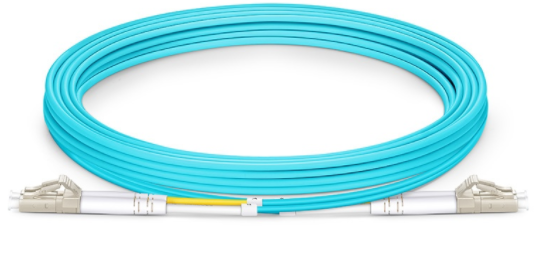
Performance Capabilities
LC to LC Fibre Cables offer several performance advantages that make them a popular choice for modern networks:
High Bandwidth: Capable of supporting vast amounts of data transmission, LC to LC cables can handle the increasing bandwidth demands of modern applications, including high-definition video streaming, cloud computing, and big data analytics.
Low Loss: The use of high-quality fiber optic material ensures minimal signal attenuation, ensuring that data travels long distances with minimal loss of quality or strength.
Excellent Signal Integrity: LC connectors are designed to provide a secure, low-loss connection, maintaining signal integrity and reducing the risk of signal distortion or interference.
High-Speed Transmission: Ideal for Gigabit Ethernet and beyond, LC to LC cables support high-speed data transmission rates, enabling real-time communication and seamless multimedia experiences.
Key Specifications
When selecting LC to LC Fibre Cables, several key specifications must be considered:
Hna hna. hl.
Ts inhmiht: Single-mode or multimode fibers offer different performance characteristics, with single-mode ideal for long-haul transmission and multimode suitable for short-distance, high-speed networks.
Wh nse eni: LC connectors feature a compact, snap-in design that ensures easy installation and maintenance. Ensure both ends of the cable are LC-compatible.Hna hna. hl.
Cable Jacket: The outer jacket material determines the cable's durability and resistance to environmental factors. Look for UV-resistant, flame-retardant, and moisture-proof options.
Inaung diylt: For multimode fibers, the core diameter (typically 50/125 or 62.5/125 microns) affects the cable's bandwidth and distance capabilities.
Ht ht: Dependent on fiber type and wavelength, LC to LC cables can support transmission distances ranging from a few meters to hundreds of kilometers.
Application Scenarios
LC to LC Fibre Cables find widespread use in various application scenarios:
Ht t: In high-density data centers, LC to LC cables are essential for connecting servers, switches, and routers, enabling high-speed data communication and reducing latency.Hna hna. hl.
Ts hna int: Supporting Gigabit Ethernet and beyond, LC to LC cables are ideal for connecting enterprise networks, enabling seamless communication between offices, departments, and remote locations.
Telecommunications: Used in fiber-to-the-home (FTTH) installations, LC to LC cables provide reliable, high-speed internet connectivity to residential and commercial customers.
Ht hna ht: In industrial settings, LC to LC cables are used to connect sensors, actuators, and control systems, enabling real-time monitoring and control of industrial processes.
Broadcasting and Media: Supporting high-definition video and audio transmission, LC to LC cables are essential for broadcasting studios, post-production facilities, and media distribution networks.
Hna hna ht
LC to LC Fibre Cables are a versatile and reliable solution for high-speed, low-loss data transmission. Their exceptional performance capabilities, comprehensive specifications, and diverse application scenarios make them a go-to choice for modern fiber optic networks. By understanding the technical details of LC to LC cables, network designers and administrators can confidently select the best solution for their unique connectivity needs.